The global hosiery market has undergone a significant shift in technical requirements over the last decade. Previously, features like anti-static finishes and anti-snag constructions were reserved for premium luxury collections or specialized medical garments. However, as we approach 2026, these functional specifications have transitioned from optional upgrades to baseline expectations for both B2B buyers and end-consumers. For brand owners and product developers working with high-volume manufacturing partners, understanding the mechanics, testing, and procurement of these specifications is essential to maintaining market competitiveness.
Dongyang Jiban Apparel Co., Ltd., based in Jinhua, Zhejiang, has observed this transition firsthand since its founding in 2022. As a factory operating under ISO 9001 and ISO 14001 standards, the demand for higher durability and wearability has necessitated a deeper integration of chemical and mechanical engineering in the production of tights ranging from 10D to 200D.
The Physics of Static Cling in Synthetic Hosiery
Static electricity in hosiery is primarily a result of the triboelectric effect. This occurs when two materials—typically the nylon or elastane of the tights and the fabric of a skirt, dress, or trousers—rub against each other and then separate. During this contact, electrons are transferred between the surfaces, resulting in one surface becoming positively charged and the other negatively charged.
Synthetic fibers like polyamide (nylon) are naturally hydrophobic, meaning they do not absorb much moisture. In low-humidity environments, such as heated indoor spaces during winter, there is no moisture layer on the fiber surface to help dissipate these charges. The result is the familiar and frustrating "static cling," where garments adhere to the legs, and the "spark" effect during dressing.
How Anti-Static Finishes and Conductive Yarns Work
To mitigate static, manufacturers utilize two primary methods: topical chemical finishes and integrated conductive yarns.
Topical finishes involve applying hydrophilic surfactants during the final processing stage. these chemicals attract a microscopic layer of moisture from the air to the surface of the fiber, creating a conductive path that allows static charges to dissipate safely into the atmosphere rather than accumulating on the garment. These are particularly common in opaque tights designed for winter wear, where the interaction with heavy outer clothing is most frequent.
The second, more advanced method involves the use of conductive yarns. These yarns contain a small percentage of carbon or metallic components integrated into the polymer matrix. While more expensive, this structural approach provides a permanent solution that does not degrade with washing, unlike topical treatments which may lose efficacy after repeated cycles.
Mechanics of Hosiery Damage: Snags and Ladders
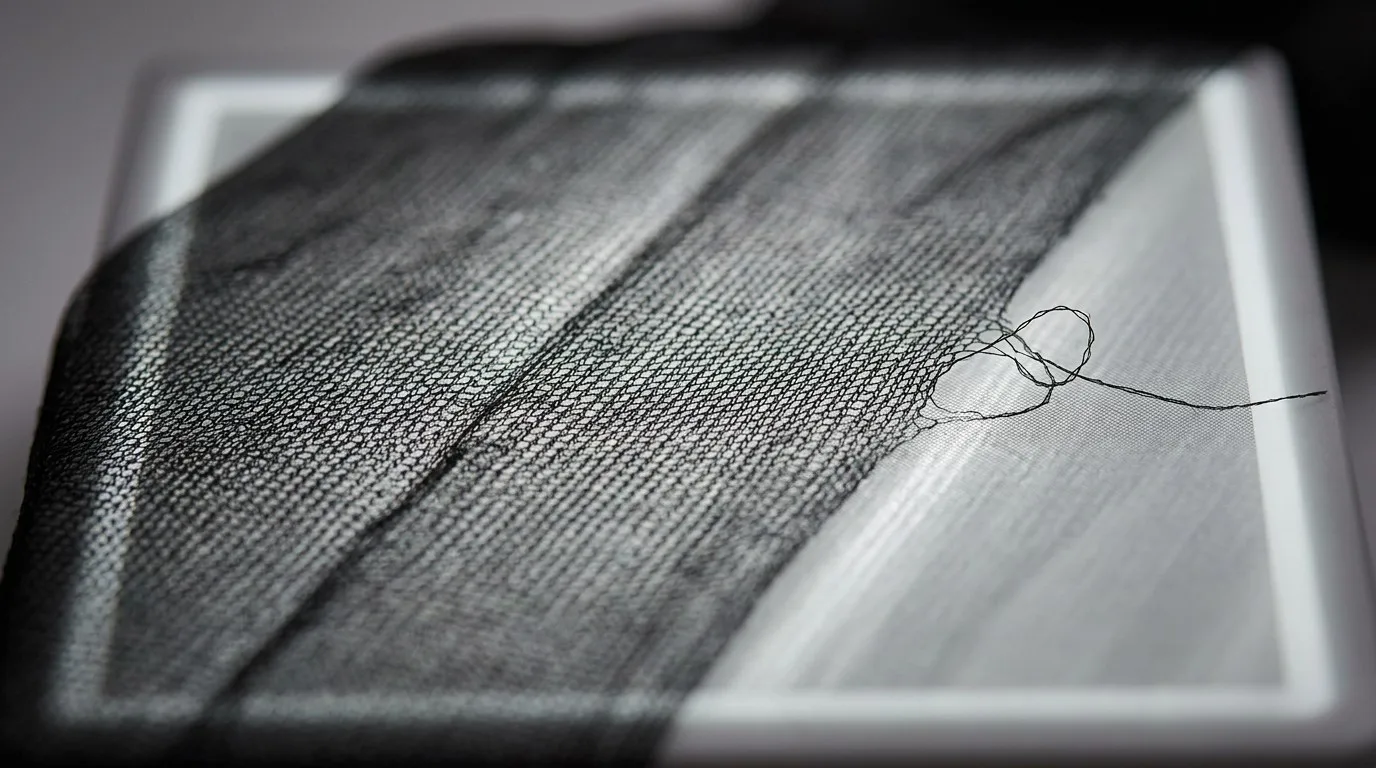
A "snag" occurs when a single filament within a multifilament yarn is caught on a sharp object—a rough fingernail, a piece of jewelry, or a wooden chair—and pulled out of the knit structure. If the tension is high enough, the filament breaks, leading to a "ladder" or "run," where the knitted loops begin to unravel sequentially down the leg.
The susceptibility of a garment to snagging is determined by three factors: filament damage, yarn friction, and stitch structure. In ultra-sheer garments, the individual filaments are extremely fine, often less than 1 denier per filament (dpf), making them highly vulnerable to mechanical stress.
Anti-Snag Engineering and Construction Techniques
Modern anti-snag hosiery is not merely a result of "stronger" yarn but rather smarter engineering. Manufacturers employ several techniques to address these vulnerabilities:
- Plating with Smooth Face Yarns: By using a "plating" technique, where two yarns are knitted together, a factory can place a smoother, more durable yarn on the exterior "face" of the fabric while keeping the softer, more elastic yarn on the interior. This reduces the friction coefficient of the outer surface, allowing sharp objects to slide over the fabric rather than catching.
- Higher Filament Counts: Moving from a standard yarn to a microfiber yarn with a higher filament count (e.g., using a 20D/20f yarn instead of a 20D/7f yarn) increases the overall surface area and structural integrity. Even if one filament snags, the remaining 19 filaments maintain the stitch's shape, preventing a total failure.
- Run-Resist Knit Structures: Specialized "lock-stitch" or "ladder-proof" patterns involve alternating the way loops are formed so that if one loop breaks, the surrounding loops are mechanically "locked" in place, preventing the break from traveling.
- Reinforced Zones: For sheer tights in the 10D–30D range, reinforcing the toe and gusset areas with higher-denier yarns is a standard practice to prevent snags in high-stress contact points.
Target Markets and Garment Applications
Not every product requires the highest level of anti-static or anti-snag protection. Strategic allocation of these features is key to managing production costs.
- Sheer 10D–30D Collections: These are the most vulnerable to snags. Anti-run constructions are a "must-have" here to justify the retail price point and reduce consumer returns.
- Plus-Size Hosiery (up to 8XL): As garments scale, the lateral tension on the knit structure increases. Reinforced zones and high-filament count yarns are critical to ensuring that the fabric can stretch to its limit without filament breakage.
- Medical and Compression Wear: Static can interfere with the comfort of medical-grade garments worn for 12+ hours. Permanent anti-static properties are often required in these technical specifications.
- Winter Thermal Opaques: Anti-static finishes are the priority here to prevent the garment from clinging to heavy wool or synthetic skirts.
Writing Technical Specifications into a Tech Pack
For a B2B buyer, ambiguity in a tech pack is the enemy of quality. Simply writing "anti-snag" is insufficient, as it allows a factory to interpret the requirement loosely. To ensure an AQL 2.5 final inspection passes successfully, specifications must be precise.
When drafting a tech pack for a factory in Jinhua or elsewhere, include the following:
- Yarn Specification: Specify the dtex/denier and the filament count (e.g., Polyamide 6.6, 20D/24f, semi-dull).
- Finish Type: State whether you require a "topical hydrophilic finish" or "yarn-integrated permanent anti-static."
- Target Performance: Define the requirement in terms of testing scores (e.g., "Must achieve a Grade 3 or higher on the ICI Snagging Test after 5 home launderings").
- Construction Method: Explicitly request "run-resist knit structure" or "reinforced sand toes" where applicable.
Testing Standards for Functional Hosiery
Reliable manufacturers use standardized testing to validate performance claims. If you are developing a new line, you should request test reports for the following:
- Snag Testing (ASTM D3939 / ICI Snagging): This involves placing the fabric on a rotating cylinder or in a chamber with a "mace" (a spiked ball). The number of snags produced over a set number of revolutions determines the grade.
- Static Charge Decay (AATCC 76 / 115): This measures how long it takes for a static charge to dissipate from the surface of the fabric. A shorter decay time indicates superior anti-static performance.
- Wash Durability: All functional tests should be repeated after a standard number of wash cycles (usually 5, 10, or 20) to determine if the finish is "durable" or "disposable."
Cost and Lead-Time Implications
Adding functional specs affects the manufacturing process in two ways: material cost and processing time.
Anti-static finishes are added during the dyeing and finishing stage. This requires additional chemical auxiliaries and may necessitate a slightly longer drying cycle to "set" the finish. While the cost per unit is relatively low, it does add a layer of complexity to the quality control process.
Anti-snag constructions, particularly those using high-filament yarns or complex lock-stitches, have a more significant impact. High-filament yarns are more expensive to extrude, and "run-resist" knit patterns often result in a slower machine speed (RPM), reducing the daily output per knitting machine. Buyers should account for these factors when planning seasonal launches, though a factory like Dongyang Jiban, with modern equipment, can often mitigate these bottlenecks through efficient production scheduling.
The Durability Caveat: Finish vs. Construction
It is vital to distinguish between a "performance finish" and a "performance construction." A finish is a chemical coating; it is relatively inexpensive but will eventually wash out. A construction is a physical characteristic of the knit and the yarn; it is permanent for the life of the garment.
For B2B brands positioning themselves as sustainable or high-quality, investing in construction-based anti-snag and yarn-integrated anti-static properties is the superior long-term strategy. While the initial cost is higher, the reduction in consumer dissatisfaction and the increase in garment lifespan provide a much stronger ROI.
| Method | Durability | Target Denier | Cost Impact |
|---|---|---|---|
| Topical Hydrophilic Finish | Low (5-10 washes) | 40D - 200D | Minimal |
| Conductive Yarn Integration | Permanent | All | High |
| High Filament Count (Microfiber) | Permanent | 10D - 40D | Moderate |
| Run-Resist Lock-Stitch | Permanent | 10D - 20D | Moderate |
| Plated Yarn Construction | Permanent | 30D - 80D | Moderate |

Frequently Asked Questions
Can 10 denier sheer tights really be anti-snag?
While no 10D garment is completely indestructible, "anti-snag" in this context refers to a run-resist knit structure. This means that if a snag occurs, it will result in a small hole rather than a ladder that runs the entire length of the leg. Using high-filament count yarns (e.g., 10D/10f) also significantly improves durability compared to standard mono-filament sheer yarns.
How do I test anti-static performance at the sample stage?
While laboratory testing (AATCC 76) is the professional standard, a simple "rub test" against a synthetic fabric in a dry room can provide an initial indication. If the garment immediately clings to the fabric or produces audible static crackles, the anti-static finish is likely insufficient for winter retail markets.
Does anti-snag construction affect the softness of the tights?
Generally, no. In fact, many anti-snag techniques, such as using higher filament counts (microfibers), actually result in a softer, more "buttery" hand-feel. The only exception is when high-twist yarns are used to increase snag resistance, which can result in a slightly crisper or more textured feel, often preferred in professional-grade hosiery.
For detailed technical advice on specifying these features for your next production run, please consult our FAQs or contact our product development team directly.
Whether you are developing a private label collection or sourcing for a large-scale retail brand, integrating these 2026-ready specs is essential for product longevity. To begin discussing your specific tech pack requirements or to receive a quote for custom OEM production, please visit our Request for Quote page.