
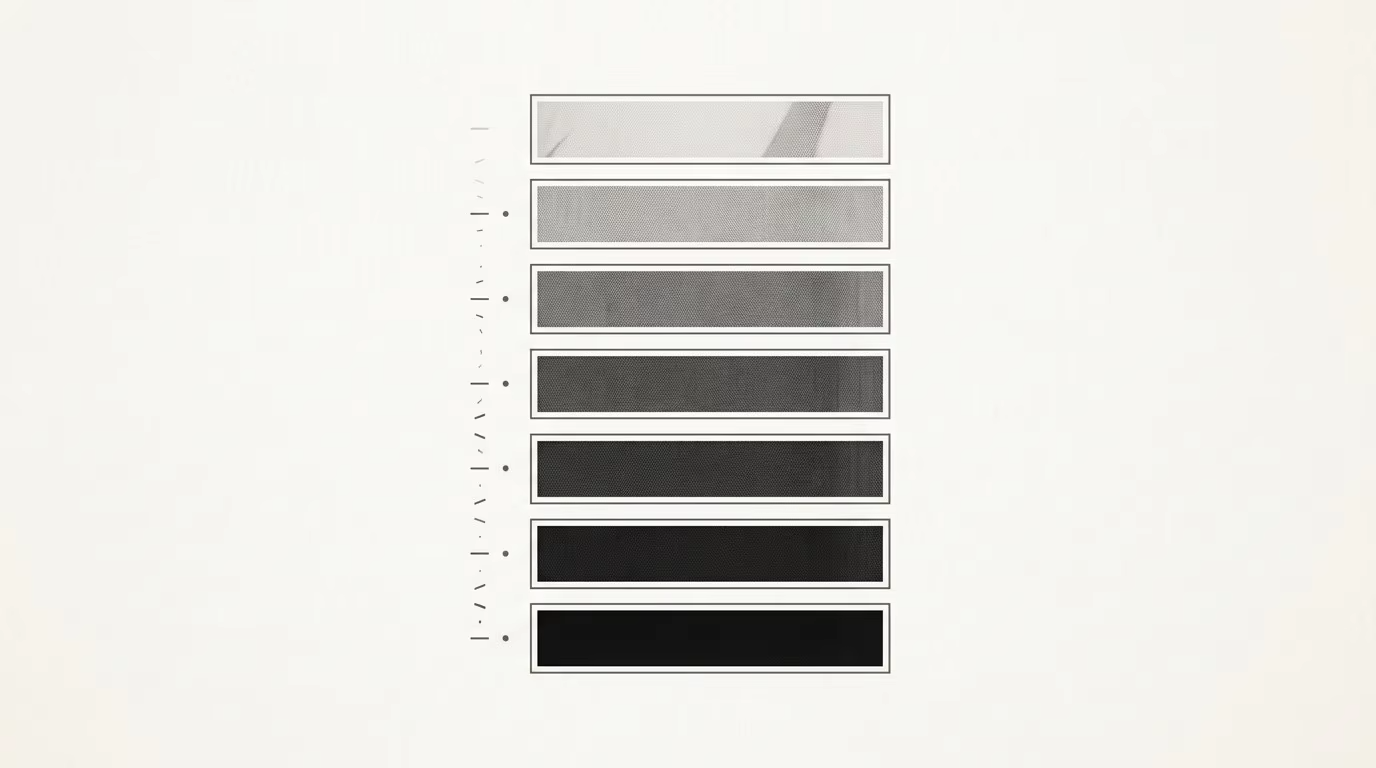
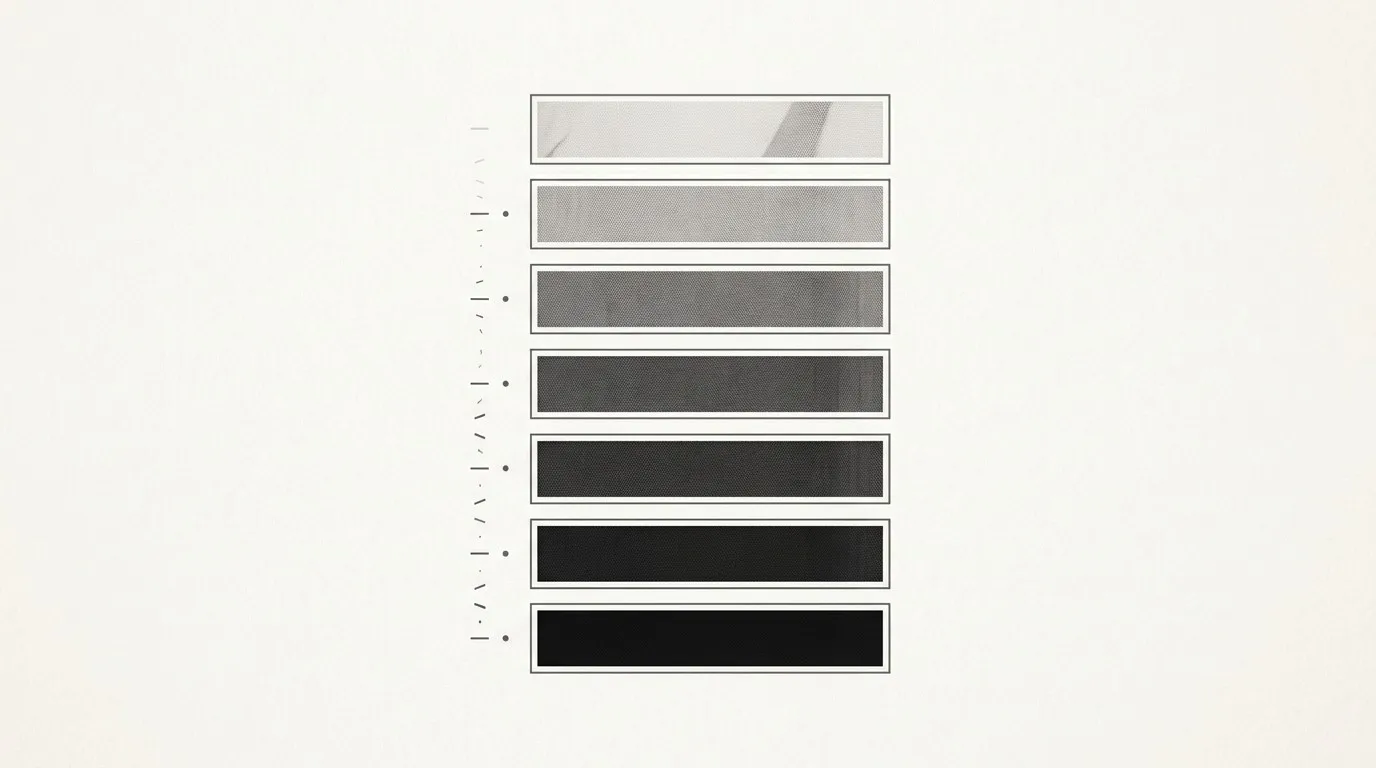
Denier is printed on nearly every pack of tights and misread by nearly everyone who buys them. A plain 200D pair and a fleece-lined 120D pair can sit side by side on the same shelf, and the thinner-looking one is often the warmer of the two. The number is precise about yarn and silent about insulation. What follows is a working explanation of denier, a chart running from 10D to 200D, and the construction factors that decide how warm tights actually feel.
What denier actually measures
Denier is a unit of linear mass density, not a thickness and not a weight rating for the finished fabric. One denier is one gram of yarn per 9,000 meters. A 20D yarn weighs 20 grams for every 9,000 meters of length; a 200D yarn weighs 200 grams over that same distance. Higher denier means a heavier individual yarn, and a great deal follows from that: how opaque a knit can be made, how it drapes, how it resists a snag, and how it feels against the skin.
Denier is not grams per square meter, and it is not a warmth figure. Two tights can both be labeled 80D and behave differently if one mill used doubled yarns, a denser knit structure, or a brushed interior. A spec written as 2/70D means two 70-denier yarns plied together, which behaves closer to a 140D yarn than to a 70D one. As a factory working across the full 10D–200D tights range, we see this confusion constantly in buyer briefs.
What denier does and does not tell you
Denier is a reliable guide to a short list of things:
- yarn fineness, and therefore the overall delicacy of the knit
- expected sheerness at a given knit density
- hand feel trend, where finer yarns generally feel smoother and lighter
- relative snag and ladder risk, which rises as yarns get finer
- approximate position on the sheer-to-opaque scale
Denier says nothing about:
- warmth or thermal retention
- whether the inside is brushed, fleece-lined, or left smooth
- fiber content, including nylon type or elastane percentage
- compression, shaping, or support level
- knit gauge and stitch density, which shift opacity independently of yarn count
- fit, including rise, waistband construction, and leg length
- real-world durability, which depends on yarn quality as much as on yarn size
That second list is where winter buying decisions are actually made.
The winter denier chart, 10D to 200D
Treat the chart as a starting filter rather than a final answer. Read the "typical warmth level" column as the performance of a plain, unlined knit at normal retail construction. A lined or brushed tight usually lands one band warmer than its denier suggests.
| Denier | Opacity | Typical warmth level | Best winter use case |
|---|---|---|---|
| 10D–15D | Ultra-sheer | Minimal; a color layer, not an insulator | Layering under trousers, boots, or office-ready opaque tights |
| 20D | Sheer | Minimal to very light | Mild winter days, indoor events, transitional layering |
| 30D–40D | Semi-sheer to semi-opaque | Light | Early winter, autumn-to-winter transition, office wear with boots |
| 50D–80D | Semi-opaque to opaque | Light to moderate | Daily commute, heated offices, mild winter days |
| 100D–120D | Opaque | Moderate; markedly higher when fleece-lined | Cold commutes, short outdoor waits, deep-winter dresses and skirts |
| 150D–200D | Fully opaque | Moderate to high in a dense plain knit | Long outdoor standing, workwear and uniform programs, wind-exposed cities |
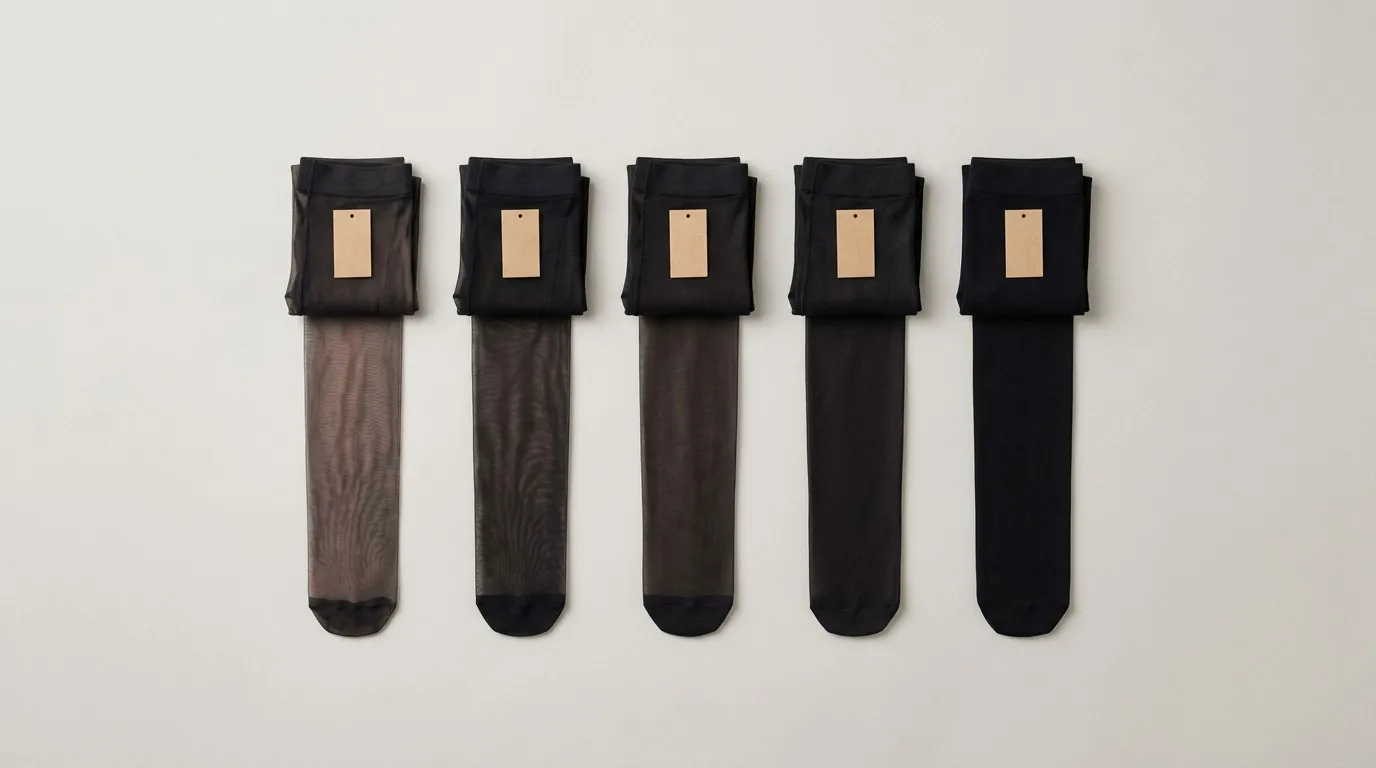
The same chart helps you navigate opaque tights by opacity level, because most styles list a denier figure and little else.
Beyond denier: what actually changes warmth
Trapped air, brushing, and fleece linings
Still air is the insulator in any textile. A fine yarn knitted at a high gauge with a raised, lofted surface holds more of it than a heavier yarn knitted flat. Brushing the inside of a tight raises fibers and creates loft; a fleece lining goes further and adds an entire lofted layer against the leg. This is the single most common cause of a low-denier pair outperforming a high-denier one, and it is why fleece-lined fake translucent winter tights at 120D often feel warmer than a smooth 200D knit.
Yarn type: nylon 6 versus nylon 6.6
Both are polyamides, and both are standard in hosiery. Nylon 6.6 typically offers a higher melting point, better heat resistance, and stronger resilience, while nylon 6 is more widely available, dyes readily, and often feels softer in the hand. For winter wear, the practical difference shows up in shape retention: 6.6 tends to recover better at the knee and ankle after repeated wear. Neither adds warmth by itself; fiber choice governs how long the tight keeps the fit that warmth depends on.
Gauge, fit, and layering
Gauge is needles per inch. A higher gauge produces a denser, more opaque fabric from the same yarn, so an 80D at a fine gauge can read as opaque while an 80D at a coarse gauge looks sheer. Fit matters just as much: a tight stretched past its intended size loses loft and traps less air, while an oversized pair bunches, rubs, and lets cold air circulate. When sizing is uncertain, size to the upper end of the height and weight band rather than guessing low. Layering is the last lever — a 15D or 20D worn under an 80D adds an air gap and buys real warmth without visible bulk.
Indoor office, commute, and standing outdoors
Winter dressing fails most often because one pair is asked to do three different jobs. Split the day instead:
- Heated office, short walk between buildings: 40D–80D. Opaque enough for a professional look, light enough that you are not uncomfortable at a desk after an hour.
- Commute with platform or bus-stop waits: 80D–120D, or a brushed 60D–80D. Wind and doorways matter more than total minutes outdoors, so wind resistance and full leg coverage count more than raw denier.
- Standing outdoors for half an hour or more: 150D–200D, ideally fleece-lined, with boots and a coat that covers the thigh. At or below freezing, the lining does more work than the number on the pack.
Dry winter air also changes the experience of the fabric itself. Static cling, snags on coat linings, and picked threads all get worse in heated indoor air and cold outdoor air, which is why the anti-static and anti-snag hosiery specifications for the 2026 season deserve a place in a winter brief alongside denier.
Why a 200D is not automatically warmer than a 120D fleece-lined pair
A plain 200D knit is dense and fully opaque, and density is frequently confused with insulation. A dense flat knit holds comparatively little still air, while a 120D with a fleece lining sits a lofted layer of fiber between yarn and skin. The air trapped in that lining is what a wearer perceives as warmth, so the lower-denier pair wins on a cold platform.
Density has a second effect indoors: a heavy plain knit is less breathable, so it can feel clammy during a long meeting or on a warm train, which reduces perceived comfort even when the thermometer says the fabric is "warmer." Judge a winter tight in this order — lining and loft, fiber and yarn quality, gauge, fit, and only then denier. Buyers who rank denier first tend to over-order heavy plain knits and under-order lined mid-weights.
Retail assortment versus personal wardrobe
A personal wardrobe only has to answer one question: what will you actually wear in your coldest fortnight? Buy for that week, prioritize fit and a lining if you stand outdoors, and keep one sheer 15D–20D for layering and evening wear.
A retail assortment has to cover a range of climates, body types, and price tiers in one buy. A workable ladder looks like this:
- 20D and 40D for shoulder seasons and warm-winter markets
- 80D as the volume core that sells across most temperate markets
- 120D as the transition weight into real cold
- 150D–200D plus at least one fleece-lined option as the deep-winter tier
- extended sizing in the best-selling weights, since demand above standard size ranges is consistently under-served
When you build that ladder with a supplier, confirm the specification behind each number rather than the number alone: yarn type, gauge, lining, waistband, reinforced toe, and size grading. Our own production — founded in 2022 in Jinhua, Zhejiang, with ISO 9001 and ISO 14001 systems and AQL 2.5 inspection — runs across 10D–200D with sizes to 8XL on an OEM, ODM, and private label basis. Minimum order quantities, sampling timelines, and production lead times vary widely between mills and by season capacity, so treat any figure you hear as a typical industry range and confirm current terms in writing with your supplier before committing to a launch date.
Care and durability for winter tights
Winter tights take more wear than sheer pairs and fail earlier if they are treated like them. A few habits extend service life considerably:
- Wash by hand or in a mesh bag on a cold, gentle cycle with a mild detergent.
- Skip fabric softener, which coats fibers and reduces both loft and moisture handling.
- Air dry flat or on a line. Tumble heat degrades elastane and shortens waistband and cuff life.
- Keep velcro, exposed zippers, rings, and rough nails away from the fabric; most snags happen while dressing.
- Rotate several pairs rather than wearing one continuously, and fold rather than stretch over hangers.
- Check the spec sheet for reinforced toes, flat seams, and a cotton gusset, which do more for durability than a higher denier alone.
A 200D built from low-grade yarn can ladder as readily as a 40D, so denier is a poor proxy for longevity. Yarn quality, gauge, and finishing decide how long a winter tight lasts.
FAQ
What denier tights are warmest for winter?
There is no single warmest number. A 150D–200D plain knit is the heaviest standard construction, but a fleece-lined or brushed 100D–120D usually feels warmer because the inner lining traps far more still air. Rank lining first, then fiber and gauge, then denier.
Are 200 denier tights warm enough for winter?
For most commutes in a temperate winter, yes. A 200D knit is fully opaque and blocks wind reasonably well. For long periods standing outdoors near or below freezing, a fleece-lined 120D–200D pair gives noticeably more insulation, especially combined with boots and a longer coat.
What denier tights should I wear to the office in winter?
40D–80D covers most heated offices, since anything heavier quickly feels warm at a desk. If your commute involves walking or waiting outdoors, move to 80D–120D, or layer a 15D–20D under an 80D to add warmth without visible bulk.
If you are sourcing winter hosiery for a brand or retail program, matching denier to a specific use case is the fastest way to cut returns and improve repeat orders. Send your target denier, lining preference, size range, and destination market through the request for quote form and we will come back with the construction options and current sampling and production terms that fit the brief.